

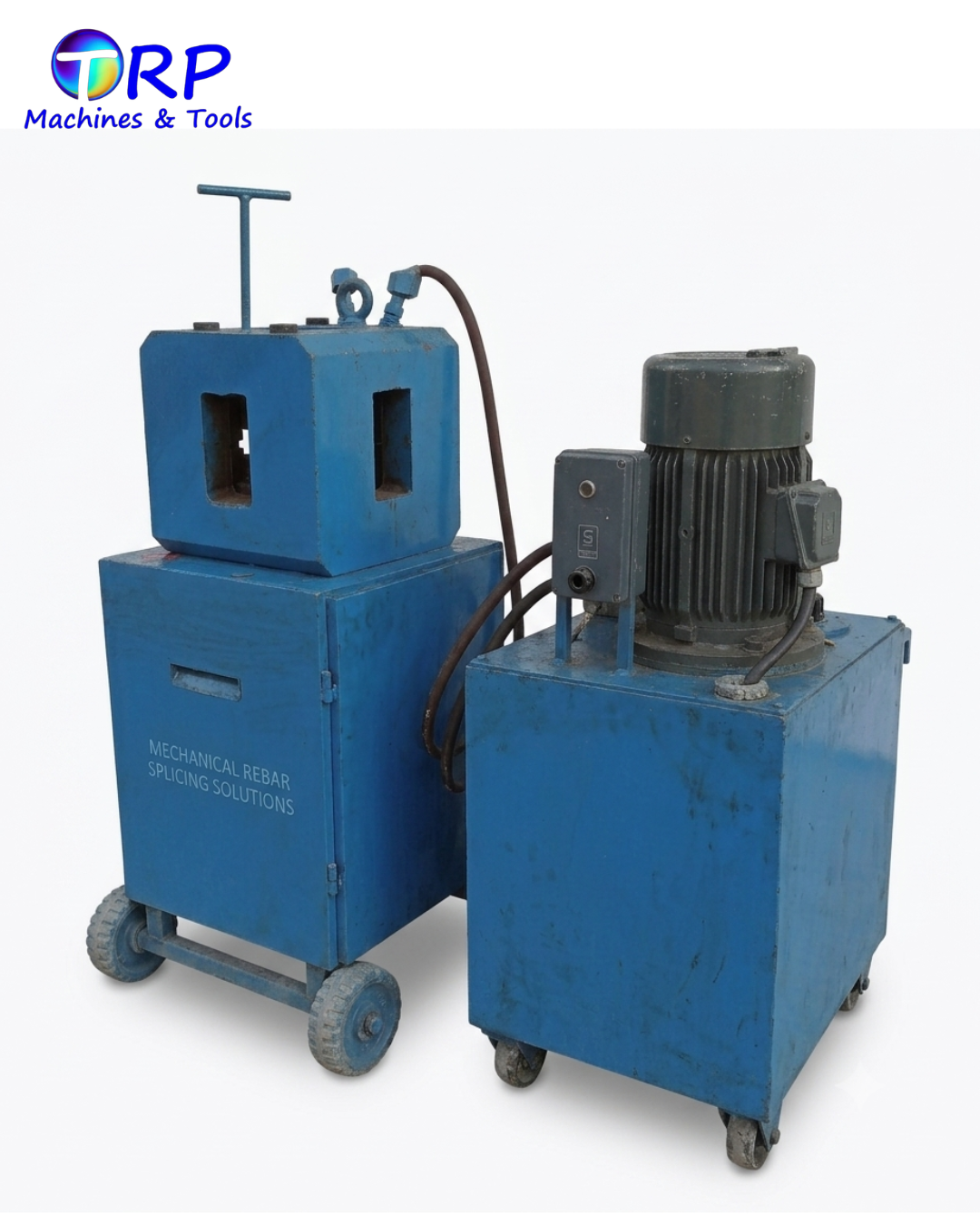
Rebar Cold Forging Machine: Working Process, Specifications, Applications and Buying Guide
Introduction
Rebar connections are an important consideration in reinforced concrete construction. When mechanical rebar couplers are specified for joining reinforcement bars, the preparation of the bar ends becomes an important part of the production and installation process.
A rebar cold forging machine is used to deform the end of a reinforcing steel bar under controlled pressure without heating the material as part of the forging process. Depending on the machine design and the intended connection system, this operation can prepare an enlarged bar end for subsequent threading and mechanical coupler assembly.
For construction equipment manufacturers, rebar coupler producers and reinforcement processing facilities, selecting a suitable cold forging machine involves more than comparing motor power or purchase price. Bar diameter compatibility, forging dimensions, tooling, production requirements and finished-end quality must also be considered.
TRP Machines & Tools manufactures and supplies construction machinery and rebar-processing equipment. This guide explains how a rebar cold forging machine works, which specifications buyers should evaluate, and what to confirm before purchasing one.
What Is a Rebar Cold Forging Machine?
A rebar cold forging machine is an industrial machine designed to apply compressive force to the end of a reinforcing steel bar, producing a specified change in its shape without intentionally heating the bar for forging.
In mechanical rebar connection applications, cold forging may be used to enlarge the bar end before threads are produced, depending on the connection design and manufacturing process.
The purpose of this operation is to prepare the reinforcement bar for a compatible mechanical connection system. The finished dimensions, material condition and connection performance must satisfy the applicable design requirements and the specifications of the selected coupler system.
Cold forging is not the same as cutting, bending or threading. Each operation performs a different function in the rebar-processing workflow.
How Does a Rebar Cold Forging Machine Work?
The precise operating sequence depends on the machine model, tooling and bar preparation method. A typical process may include the following stages.
Step 1: Check the Reinforcement Bar
Confirm the bar diameter, grade, condition and suitability for the intended forging process. The machine must support the specified bar size and material.
Step 2: Prepare and Position the Bar
Prepare the bar end according to the machine manufacturer's operating instructions. Position and secure the bar correctly before starting the forging cycle.
Step 3: Apply Controlled Forging Pressure
The machine applies compressive force to the bar end through its forging mechanism. The material deforms into the required shape according to the tooling and process settings.
Step 4: Inspect the Forged End
Check the resulting dimensions and surface condition against the specified requirements. Reject or investigate parts that do not meet the required tolerances.
Step 5: Complete the Connection Preparation
Where the selected coupler system requires threads, carry out the appropriate threading operation using compatible equipment. Inspect the finished threads and verify compatibility with the specified coupler before assembly.
Important: The sequence and parameters must follow the instructions for the actual machine and connection system. Not every coupler design uses the same preparation process.
Important Specifications to Check Before Buying
A machine's specifications help determine whether it is suitable for your production requirements. Buyers should request confirmed technical information rather than relying on a general product description.
Specification What to Confirm Model number Exact model and machine configuration Bar diameter range Minimum and maximum supported TMT bar sizes Hydraulic system Operating pressure, cylinder specifications and power-pack configuration, where applicable Motor power Rated motor capacity and electrical requirements Power supply Voltage, phase and frequency Forging dimensions Required finished-end dimensions and supported tooling Production capacity Verified cycle time and expected output for specific bar sizes Operating method Manual, semi-automatic or automatic functions, as applicableMachine dimensions Installation space, overall size and weight Accessories Included dies, tooling, controls and other supplied components
These details should be confirmed for the exact model being quoted. Specifications from one machine should not be assumed to apply to another.
What Determines the Quality of a Forged Rebar End?
A cold forging machine should be evaluated on its ability to produce the required bar-end geometry consistently under the specified operating conditions.
Important checks include:
- Dimensional accuracy: The forged end must meet the dimensions specified for the intended connection.
- Material suitability: The reinforcement steel must be appropriate for the selected forging process.
- Surface condition: The finished end should be inspected for visible defects or irregularities that require investigation.
- Thread compatibility: Where threading follows forging, the thread profile and dimensions must match the approved connection system.
- Process consistency: Sample results across the intended bar sizes can help establish whether the machine is suitable for the production requirement.
- Documented performance: Relevant inspection records and connection qualification or test reports should be reviewed where required.
The finished mechanical connection must meet the applicable structural design, project specifications and relevant testing requirements. A machine's rated capacity alone does not prove the performance of the completed connection.
Applications of a Rebar Cold Forging Machine
A rebar cold forging machine may be used in rebar-processing operations where bar-end enlargement is required for a compatible mechanical connection system.
Potential applications include:
- Rebar coupler manufacturing and preparation facilities.
- Mechanical reinforcement connection production.
- Construction equipment manufacturing and processing workshops.
- Reinforcement bar preparation for specified building and infrastructure projects.
- Production lines that combine bar-end forging with compatible threading equipment.
The suitability of a machine depends on its design, supported bar sizes and the requirements of the intended connection system.
Cold Forging vs Threading: What Is the Difference?
Cold forging and threading are separate operations, although they may be used together when preparing reinforcement bars for threaded couplers.
Cold forging changes the shape of the bar end through compressive deformation. In suitable connection systems, it can create an enlarged end for subsequent processing.
Threading produces the required thread profile on the prepared bar end so that it can engage with a compatible threaded coupler.
A rebar cold forging machine should therefore not automatically be treated as a complete threading machine. Buyers should confirm whether threading equipment is integrated, included separately or needs to be purchased as an additional machine.
How to Choose the Right Rebar Cold Forging Machine
Before requesting a quotation, prepare the following information:
- Required bar sizes: Identify the TMT bar diameters and grades you process.
- Production target: Estimate the number of bars or connections required per shift.
- Connection system: Confirm the coupler type and the required bar-end preparation process.
- Technical compatibility: Request confirmation of the machine's supported diameters, tooling and finished dimensions.
- Demonstration: Ask whether sample processing can be demonstrated using your intended bar specifications.
- Installation requirements: Confirm the power supply, operating space, foundation or mounting requirements, where applicable.
- Total purchase scope: Check which tooling, accessories, installation services and training are included in the quotation.
- After-sales support: Ask about operating guidance, maintenance, spare parts and service arrangements.
Providing these details helps the supplier assess the application and recommend an appropriate machine configuration.
Why Consider TRP Machines & Tools?
TRP Machines & Tools manufactures and supplies rebar-processing and construction machinery, including rebar cold forging and threading equipment.
When evaluating a machine for your operation, discuss the intended bar diameter range, required production capacity, compatible coupler system and available machine configuration with the supplier.
Buyers should also request the relevant technical specifications, clarify the supplied accessories and confirm installation and support arrangements before finalizing an order.
For product enquiries, technical clarification or a quotation, contact TRP Machines & Tools through its official website.
Frequently Asked Questions
1. What is the purpose of a rebar cold forging machine?
It applies compressive force to deform a reinforcing bar end without intentionally heating the bar for forging. In suitable mechanical connection systems, this prepares the bar end for subsequent processing and coupler assembly.
2. Which TMT bar sizes can a cold forging machine process?
The supported diameter range varies by model. Buyers should confirm the minimum and maximum bar sizes, material grades and tooling compatibility with the machine manufacturer.
3. Does a rebar cold forging machine also produce threads?
Not necessarily. Cold forging and threading perform different operations. Some production setups use a separate rebar threading machine after the forging process.
4. How can buyers evaluate machine production capacity?
Ask for measured cycle times and sample output for the specific bar sizes you intend to process. Consider loading, handling, tooling changes and inspection when estimating actual production per shift.
5. What should be checked after cold forging?
Inspect the forged-end dimensions and surface condition against the specified requirements. If threading follows, verify the thread dimensions and compatibility with the intended coupler system.
6. What information is required to request a quotation?
Provide the required bar diameter range, intended application, target production volume, connection type, electrical supply and desired accessories. These details help establish the appropriate machine configuration.
7. How do I choose a suitable rebar cold forging machine manufacturer in India?
Compare confirmed specifications, demonstrated performance, sample inspection results, machine configuration, documentation, delivery terms and after-sales support. Evaluate the machine against your actual production requirements rather than price alone.
Conclusion
A rebar cold forging machine is an important part of reinforcement processing when the selected mechanical connection system requires a forged bar end. Choosing the right equipment requires careful evaluation of bar compatibility, tooling, finished dimensions, production requirements and the subsequent threading or connection process.
By checking these details before purchase, rebar coupler manufacturers and construction equipment buyers can make a more informed decision about machine suitability.
For information about rebar cold forging machines and related rebar-processing equipment, contact TRP Machines & Tools to discuss your application and technical requirements.