

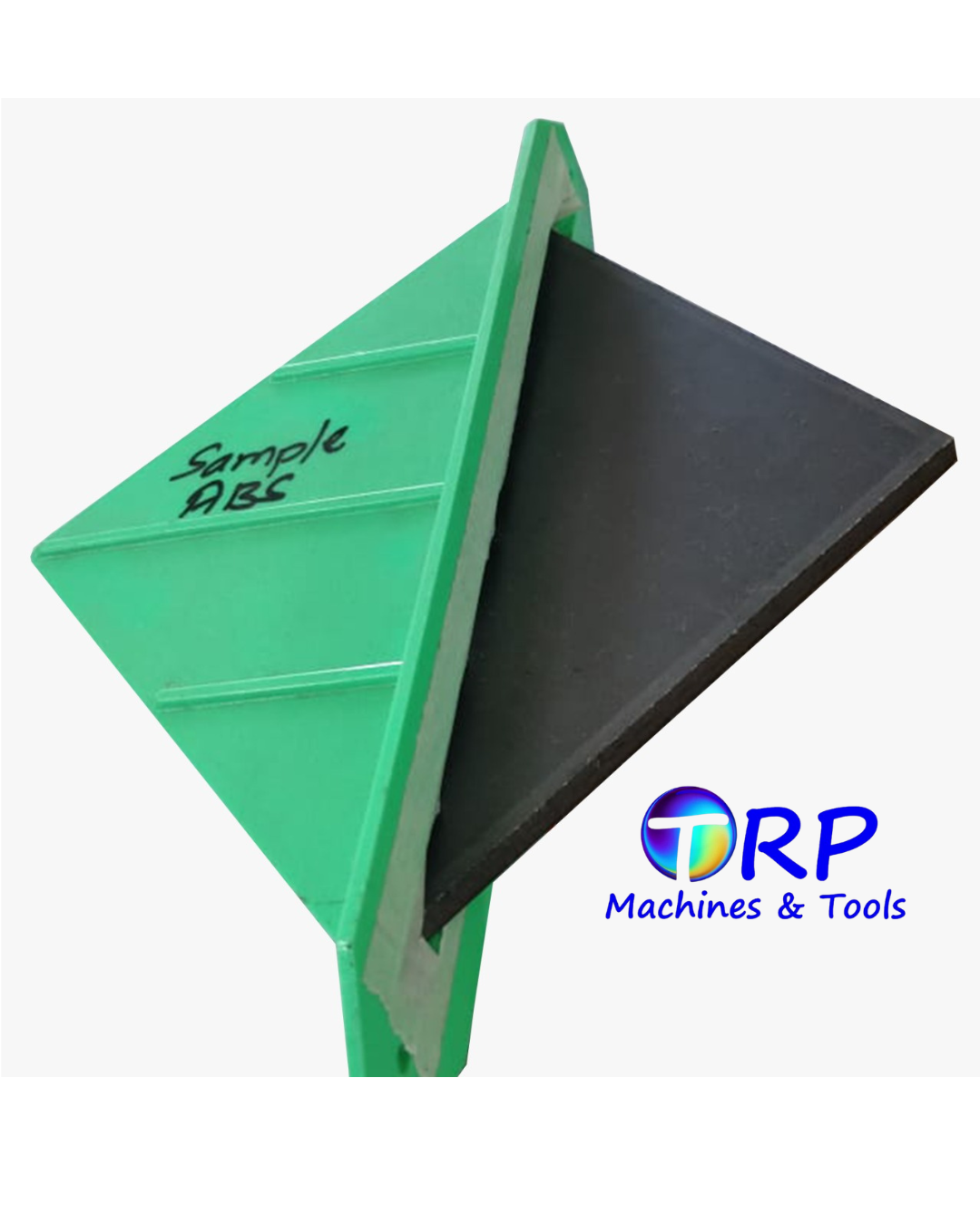
Diamond Dowel IS 456 is a good search term to professionals who would like to see how diamond dowels are connected to the Indian concrete construction. A diamond dowel plate is utilized as a load transfer device in concrete joints and IS 456:2000 includes basic provisions for structural use of plain and reinforced concrete. BIS states that IS 456:2000 is "Plain and reinforced concrete - Code of practice", Fourth Revision.
Nevertheless, it must be mentioned that IS 456 is not a specific product standard for diamond dowel plates. Consequently, the choice of a diamond dowel system must take into consideration the concrete design, project requirements, loads, joints, and technical data from the manufacturer.
What Is IS 456?
The Indian Standard IS 456 is the concrete standard in India that provides the specifications for the design and construction of plain and reinforced concrete structures. This standard addresses such issues as material requirements, mix design, reinforcement design and details, including those related to dowel bars in joints. Whereas IS 456 is a general standard for concrete (and IRC standards are used specifically for pavement dowels), engineers usually correlate the manufacturing and installing of dowel bars according to the principles of IS 456. The diamond dowel bars named IS 456 are manufactured according to these stringent tolerances and material requirements.
Connection between Diamond Dowel and IS 456
Connection between diamond dowel IS 456 and concrete floors can be seen from their respective functions.
While IS 456 forms the basic guidelines for construction using concrete, the diamond dowel system becomes the load transfer device in joints.
Thus, while the design may include the following criteria:
- Concrete strength class
- Thickness of slab
- Loads applied
- Joint configuration
- Contraction of concrete
- Temperature effects
- Load transfer requirements
- Size of dowel plate
- Spacing of plates
- Sleeve configuration
- Installation process
It must be determined based on the calculations and needs of the project.
Why Are Diamond Dowels Required for Concrete Floors?
The concrete slabs will be subjected to movement and stresses due to their working conditions. In addition, industrial floors are subjected to repeated movement of forklift trucks and other equipment.
The use of an appropriate diamond dowel system can facilitate the transfer of vertical loads from one slab panel to another. It will also help to minimize any excessive differential movement between two adjacent slabs. The use of a sleeve is also very important since concrete slabs require the provision for movement in horizontal direction.
Diamond Dowel Plate Size and Concrete Design
The correct plate dimensions should be selected according to the specific application. Factors such as slab thickness and expected loading can influence the required configuration.
There is no single Diamond Dowel IS 456 size that applies to every concrete floor. Instead, engineers and contractors should consider the actual project conditions.
Important factors include:
1. Slab Thickness
The thickness of the concrete slab influences the location and arrangement of the dowel system. The plate should be suitable for the designed slab section.
2. Load Conditions
A warehouse floor carrying forklift traffic may have different requirements from a lightly loaded commercial floor. Expected wheel loads and traffic frequency should therefore be considered.
3. Joint Spacing
The construction joint layout affects how load-transfer components are distributed throughout the floor.
4. Concrete Movement
Shrinkage and temperature variations can cause horizontal movement. The plate and sleeve arrangement should allow the required movement without
compromising vertical load transfer.
5. Installation Requirements
Correct positioning and alignment are essential. Even a properly manufactured plate may not perform as intended if it is incorrectly installed.
Advantages of a Diamond Dowel Plate Jointing System
An adequately designed and installed jointing system can offer many advantages to concrete floors.
Load Transfer Efficiency
Diamond plates assist in efficient load transfer over construction joints and allow better performance of adjacent slabs.
Lower Stress Concentration
Appropriate load transfer helps in minimizing excessive stress and differential movements in concrete joints.
Horizontal Movements
The presence of a sleeve enables horizontal movements that are due to shrinkage and temperature variations.
Ideal for Heavy Loads
Diamond dowel plates can be used in industrial areas, where there is heavy floor traffic.
Easier Installation Process
The combination of plates and sleeves offers an easy way of installing the load transfer mechanism at the joint.
Application of Diamond Dowel Systems
The following are some concrete floor applications for diamond dowels:
- Industrial warehouses
- Manufacturing plants
- Distribution centers
- Logistics facilities
- Commercial buildings
- Parking areas
- Heavy-duty concrete floors
- Factory floors
- High-traffic slab applications
It is essential to analyze each application independently due to differences in load capacity, thickness, joints, and environmental factors.
Common Dowel Size and Specifications
Even though the actual size may differ based on project needs, some of the most commonly used dowel sizes in relation to IS 456 guidelines include:
- Size: Usually anywhere between 20mm and 40mm, depending on the thickness of the slab and load needs.
- Length: Ranging usually between 400mm and 600mm, with half the rod bonded and the other half not, to allow movement of the slab.
- Spacing: Normally spaced out at 300mm center-to-center along the joint, but depending on the thickness of the slab and loads applied.
- Material Grade: Usually made of mild steel or high yield steel, in accordance with IS material standards, normally with a diamond ground finish.
Refer to your structural drawing and IS/IRC guidelines for precise Diamond Dowel IS 456 sizes, since pavement dowels are usually specified using IRC:58 along with IS 456.
Best Installation Practices for Diamond Dowel IS 456
Installation practices are equally critical in ensuring that the correct dowel bars are used for Diamond Dowel IS 456 joints. Such practices include:
- Alignments: The dowel bars need to be aligned perfectly parallel to the slab and to each other in order to prevent restraint due to expansion.
- Debonding: Half of the dowel bar needs to be covered in debonding agent or sleeve in order to allow horizontal movement of the dowel.
- Chairs: The dowels need to be supported using baskets or chairs in order to ensure that their heights and spacing are consistent when the concrete is poured.
By following such practices, one can be sure that the Diamond Dowel IS 456 joints requirements will be met.
Selecting the Proper Diamond Dowel Bars for Your Construction Project
When procuring dowel bars, consider suppliers that will offer you with certification stating that their Diamond Dowel IS 456 products meet the material requirements of tensile strength, yield strength, and elongation. Suppliers can also offer a variety of sizes depending on your pavement thickness and class of loads and packaging to avoid any damages or corrosion.
Conclusion
The Diamond Dowel IS 456 is linked to two major concepts related to concrete building, namely the diamond dowels, that are used for load transfer purposes, and the IS 456:2000, the document that gives general requirements for plain and reinforced concrete. According to BIS, IS 456:2000 is the Fourth Revision of the Plain and Reinforced Concrete Code of Practice.
It is important to note that IS 456 is not a diamond dowel product standard. The choice of the diamond dowel assembly depends on the slab thickness, loading, joint, movement needs, and engineering issues related to the particular project. Through the selection of the right diamond dowel plate and sleeve system, it will be possible to achieve effective load transfer and controlled movement within concrete floors.