

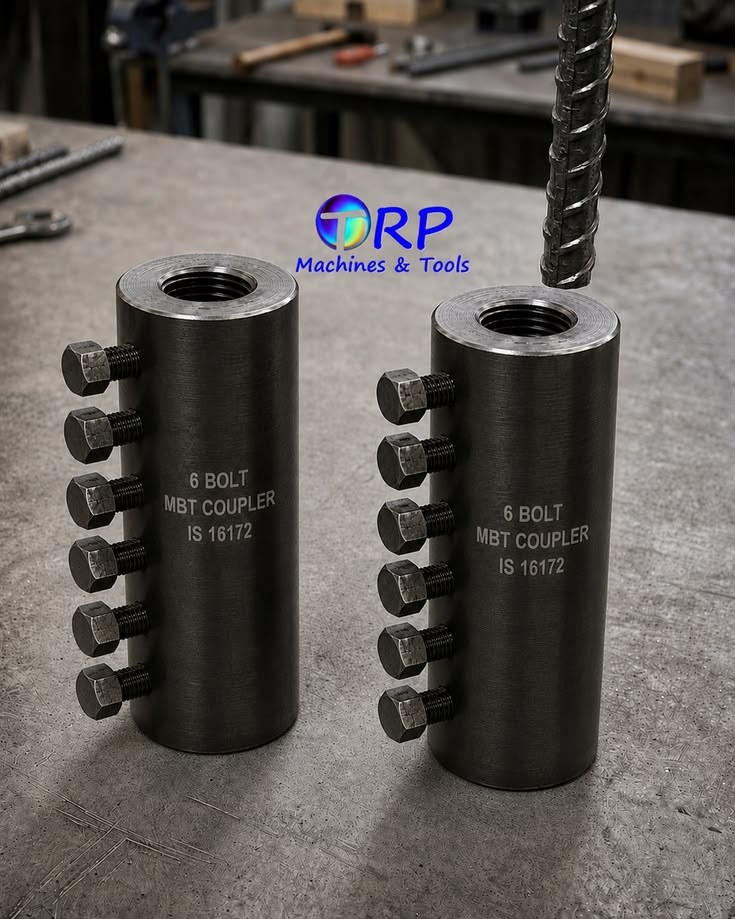
Mechanical Bolted Couplers are vital for connecting reinforcement bars (rebar) in concrete structures. A weak splice can undermine the strength of the entire structure, regardless of the quality of the concrete or rebar. Mechanical Bolted Couplers offer a reliable solution, gaining popularity in India’s construction industry for faster, safer, and standardized reinforcement practices. This guide covers what Mechanical Bolted Couplers are, their working principles, their advantages over traditional lap splicing, and how to select the right supplier.
What Is a Mechanical Bolted Coupler?
A Mechanical Bolted Coupler is a mechanical component used to join reinforcement bars (rebar) without traditional lap splicing. It connects two rebars through a bolted mechanical gripping system.
This coupler is especially useful where overlapping rebars could consume extra space, steel, and installation time. By using a mechanical connection, construction teams can place reinforcement more efficiently.
Mechanical bolted couplers are widely used in:
- High-rise buildings
- Industrial structures
- Bridges
- Foundations
- Infrastructure projects
- Other reinforced concrete applications requiring reliable rebar connections
How Does a Mechanical Bolted Coupler Work?
The coupler securely grips and connects rebars by positioning them inside the coupler and tightening bolts according to installation guidelines. This mechanical grip holds the bars in place and transfers forces through the connection.
Key considerations for optimal performance include:
- Selecting the right product for the bar diameter
- Meeting project specifications
- Ensuring correct positioning and installation
- Adhering to applicable standards
Proper installation is critical, as the system’s strength relies on product compatibility, correct technique, and site conditions.
Key Benefits of Mechanical Bolted Couplers
- Efficient Rebar Connection
- Provides an effective alternative to overlapping reinforcement bars, especially useful in tight spaces.
- Reduced Rebar Congestion
- Minimizes the need for overlapping bars, helping to alleviate congestion in heavily reinforced areas.
- Practical Installation
- Features a simple mechanical connection process, allowing secure and straightforward installation with proper guidance.
- Suitable for Various Construction Projects
- Applicable in residential, commercial, industrial, and infrastructure projects, adaptable to structural and site-specific needs.
- Better Material Management
- Can reduce the amount of reinforcement needed for lap lengths, aiding in efficient material use while ensuring strong connections.
Applications of Mechanical Bolted Couplers
Mechanical bolted couplers are versatile and widely used in various reinforced concrete applications, including:
- High-rise building construction
- Residential and commercial projects
- Industrial structures
- Bridges and infrastructure
- Foundations and columns
- Concrete walls
- Reinforced concrete beams
- Infrastructure development
- Heavy structural construction
- Projects with high reinforcement congestion
Note: The appropriate coupler should be selected based on reinforcement bar size, structural requirements, installation conditions, and specific project specifications.
Factors to Consider Before Buying Mechanical Bolted Couplers
1.Rebar Diameter
Choose a coupler that matches the diameter of the reinforcement bars used in the project.
2.Connection Requirements
Ensure the coupler meets the structural specifications and performance needed for the connection.
3.Installation Method
Review the installation process, including bolt arrangement, tightening procedures, and availability of required tools on site.
4.Material Quality
Opt for couplers made with high-quality materials and controlled manufacturing processes. Quality inspection and product traceability are beneficial.
5.Supplier Support
Prefer suppliers who provide technical guidance, documentation, installation help, and reliable delivery services to facilitate smooth procurement and implementation.
Mechanical Bolted Coupler for Modern Construction
As construction demands evolve, mechanical rebar splicing systems offer an efficient alternative to traditional lap connections. Mechanical bolted couplers effectively address challenges like reinforcement congestion, limited space, and installation complexities when properly selected and installed.
For contractors, engineers, builders, and infrastructure companies, choosing the right rebar connection system requires careful evaluation of project specifications and reinforcement needs. Engaging in technical consultation ensures the solution fits the intended application.
TRP Machines & Tools supports customers with a comprehensive range of rebar couplers, mechanical splicing systems, construction machinery, and technical assistance. Their product portfolio and services cater to construction and infrastructure projects across India and international markets, helping ensure project success with reliable reinforcement solutions.
Conclusion
The Mechanical Bolted Coupler is a practical and efficient alternative to conventional lap splicing in modern reinforced concrete construction. It conserves steel, reduces reinforcement congestion, speeds up project execution, and ensures reliable structural performance—all without requiring specialized threading equipment on site. As more contractors and engineers in India adopt mechanical splicing systems, selecting a high-quality Mechanical Bolted Coupler from a trusted manufacturer is crucial for project safety and efficiency.
If you are considering switching to mechanical rebar splicing, contact TRP Machines & Tools for detailed product specifications, competitive pricing, and expert technical guidance tailored to your project's needs.
FAQs
Q1. What sizes of rebar does a Mechanical Bolted Coupler support?
Mechanical bolted couplers are generally available for rebar diameters ranging from 12 mm to 40 mm, depending on the manufacturer’s product range.
Q2. Is a Mechanical Bolted Coupler reusable?
No, once properly torqued and locked onto the rebar, the coupler creates a permanent structural connection and is not designed for reuse.
Q3. Does installing a Mechanical Bolted Coupler require special machinery?
No special machinery is required. Installation only needs a calibrated torque wrench and basic training for site workers.