

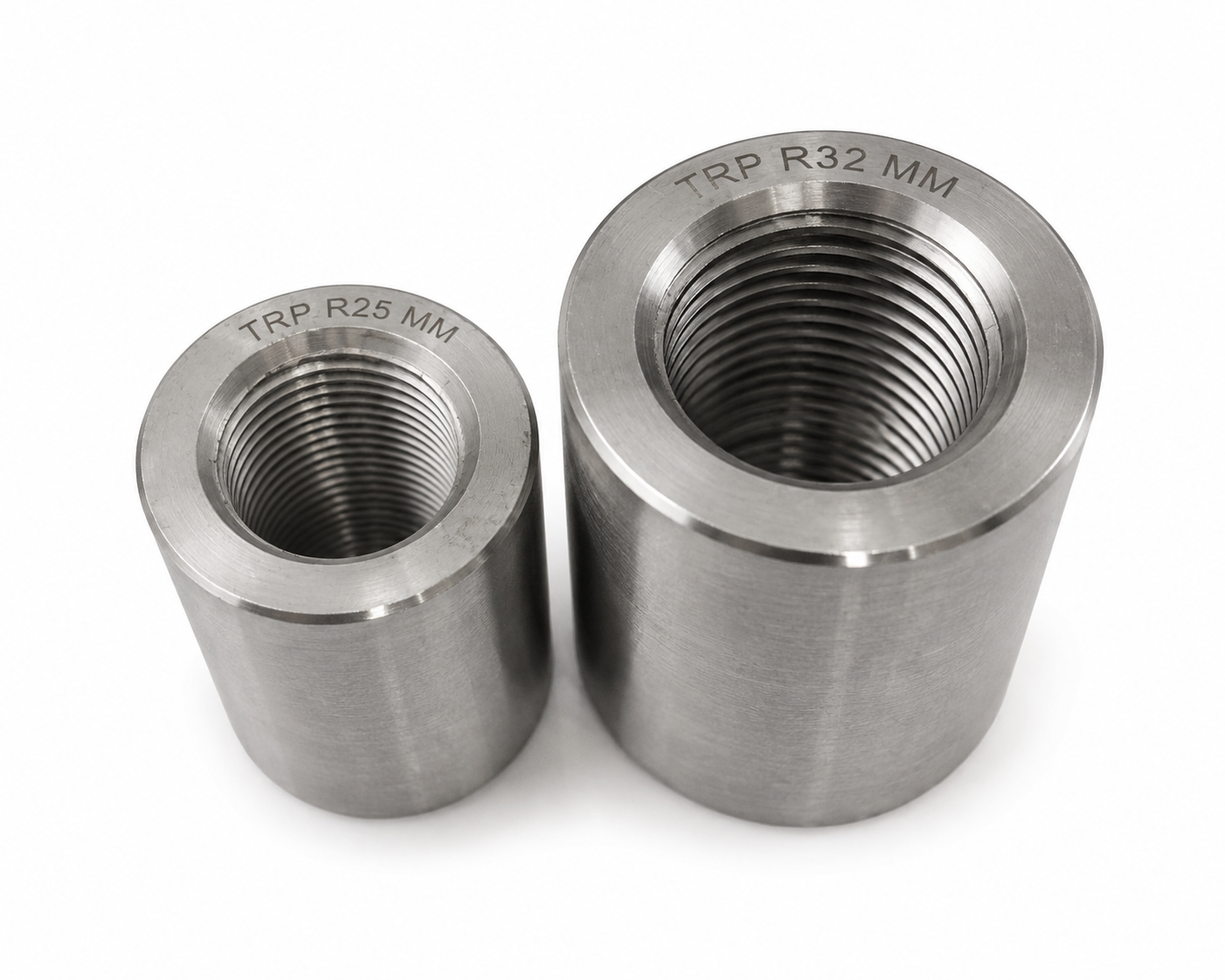
Rebar Coupler: Types, Sizes, Applications, Strength and Installation Guide
Rebar couplers are used to mechanically connect two reinforcing steel bars in reinforced concrete structures. They provide an alternative to conventional lap splicing, particularly where reinforcement congestion, limited space or project specifications make mechanical connections suitable.
Choosing the right rebar coupler involves more than matching the bar diameter. The connection type, reinforcement grade, design requirements, testing criteria and installation method all matter.
This guide explains the main types of rebar couplers, how they work, where they are used and what to check before purchasing.
1. What Is a Rebar Coupler?
A rebar coupler, also called a TMT bar coupler or mechanical rebar splice, is a metal connector designed to join two reinforcing bars end-to-end.
It transfers forces from one reinforcing bar to another through a mechanical connection. Unlike lap splicing, which overlaps two bars over a calculated length, a coupler connects the bars at a common joint.
Common applications include:
· High-rise buildings and structural columns
· Bridges, flyovers and infrastructure projects
· Metro, tunnel and foundation construction
· Precast concrete elements
· Heavily reinforced beams and walls
· Structures where reinforcement congestion needs to be managed
2. Types of Rebar Couplers
Different coupler designs suit different reinforcement conditions and installation requirements.
1. Parallel Threaded Coupler
· Joins reinforcement bars using parallel threads and a threaded sleeve.
· Requires correctly prepared and dimensioned bar ends.
· Commonly selected for applications where threaded connections are specified.
2. Taper Threaded Coupler
· Uses tapered threads to engage and connect reinforcement bars.
· The thread profile and engagement must match the coupler design.
· Requires suitable bar-end preparation.
3. MBT Coupler
· Uses internal gripping components and locking bolts to connect reinforcement bars.
· Can be useful where conventional bar-end threading is not suitable.
· Installation must follow the specified bolt-tightening procedure.
4. Push-Fit / One Touch Coupler
· Connects reinforcement bars through a product-specific push-fit mechanism.
· Designed to simplify the connection process in suitable applications.
· The preparation and installation procedure depends on the product design.
5. Position Coupler
· Designed for connections where one or both reinforcement bars cannot rotate freely.
· Useful in restricted installation conditions.
· Selection depends on the reinforcement arrangement and connection requirements.
Important: These coupler types are not interchangeable. Confirm the coupler design, bar preparation, installation procedure and project approval requirements before selection.
3. Rebar Coupler vs Lap Splicing
Both methods connect reinforcement, but their working principles and installation requirements are different.
Rebar coupler:
· Uses a mechanical connector to join two reinforcement bars.
· Provides a compact connection without requiring a conventional overlapping length.
· Can help reduce reinforcement congestion in suitable applications.
· May require threading, bar-end preparation or other product-specific procedures.
· Uses a separate connector to complete the joint.
· Requires compatible installation tools and procedures.
Lap splice:
· Connects reinforcement by overlapping two bars over a calculated length.
· Requires additional reinforcement length for the overlap.
· May increase congestion where several bars meet.
· Usually does not require special threading of the bar ends.
· Depends on correct reinforcement positioning and structural detailing.
A mechanical splice is not automatically better for every application. The structural design, applicable standards, reinforcement layout and site conditions should determine the suitable method.
4. Rebar Coupler Sizes and Specifications
Rebar couplers are selected according to the nominal diameter and grade of the reinforcement bars being connected.
Common reinforcement diameters and their theoretical bar areas include:
· 12 mm: 113.10 mm²
· 16 mm: 201.06 mm²
· 20 mm: 314.16 mm²
· 25 mm: 490.87 mm²
· 28 mm: 615.75 mm²
· 32 mm: 804.25 mm²
· 36 mm: 1,017.88 mm²
· 40 mm: 1,256.64 mm²
Note: These values represent theoretical cross-sectional areas of nominal reinforcement bars, not coupler dimensions.
Before ordering a rebar coupler, check:
· Bar diameter and reinforcement grade
· Coupler type and compatible thread profile
· Required connection performance
· Coupler length and dimensions
· Installation and tightening requirements
· Applicable project specifications
5. How Are Rebar Couplers Manufactured?
The manufacturing process depends on the coupler design and material specification. For cold-forged threaded couplers, the process generally involves:
1. Material Selection: Suitable steel is selected according to the intended application and design requirements.
2. Cutting and Preparation: Material is cut to the required size for the coupler.
3. Cold Forging: The metal is shaped under pressure without conventional hot melting.
4. Machining: Internal dimensions and required thread profiles are produced.
5. Inspection: Dimensions, threads and surface condition are checked.
6. Testing: Performance testing is carried out according to the applicable specification and project requirements.
Cold forging is a manufacturing method, not proof of coupler performance by itself. The finished product must still meet the required dimensional and mechanical criteria.
6. Rebar Coupler Strength and Testing
The strength of a mechanical rebar connection must be evaluated against the design requirements and relevant testing criteria.
Common checks may include:
· Tensile Testing: Evaluates the connection's behaviour under axial tension.
· Slip Testing: Measures relative movement between the connected reinforcement bars.
· Fatigue Testing: Evaluates performance under repeated loading where required.
· Dimensional Inspection: Checks sleeve dimensions, thread profiles and other critical measurements.
· Material Verification: Confirms material properties where specified.
Testing requirements vary according to the coupler type, applicable standard and project specification. Buyers should request relevant test documentation rather than relying only on a stated strength value.
7. Rebar Coupler Standards in India
For projects in India, IS 16172:2023 is an important reference for reinforcement couplers used in mechanical splices of steel bars in concrete. Reinforcement bar requirements should also be checked against the applicable bar specification, such as IS 1786, where relevant.
International projects may specify standards from the ISO 15835 series or other recognised project-specific requirements.
Before finalising a coupler, confirm:
· The standard and edition specified in the project documents
· Required performance classification
· Testing and documentation requirements
· Compatibility with the reinforcement grade and diameter
Do not assume that a coupler is suitable for a project simply because it is described as a mechanical or high-strength coupler.
8. Where Are Rebar Couplers Used?
Rebar couplers are used in several types of reinforced concrete construction.
· High-Rise Buildings: Help manage reinforcement connections in columns, shear walls and other structural members.
· Bridges and Flyovers: Used in reinforcement systems where mechanical splicing is specified.
· Metro and Tunnel Projects: Useful in congested reinforcement arrangements and restricted work areas.
· Foundations: Used in pile cages, retaining structures and foundation reinforcement.
· Precast Construction: Support reinforcement connections in precast elements where the design permits.
The final application should always follow structural drawings and approved construction procedures.
9. Rebar Coupler Installation: What Should Be Checked?
Correct installation is essential for achieving the intended connection performance. The procedure varies with the coupler design.
For a typical threaded coupler installation:
1. Confirm the reinforcement diameter, grade and coupler compatibility.
2. Prepare the bar ends according to the specified threading process.
3. Inspect the threads for damage, incorrect dimensions or contamination.
4. Engage the bars with the coupler as instructed by the manufacturer.
5. Tighten the connection using the specified procedure and tools.
6. Complete the required inspection and installation records.
MBT and push-fit couplers may require different preparation and installation steps. Always follow the product-specific instructions.
10. How to Select the Right Rebar Coupler
Use the following checklist when evaluating a rebar coupler for a construction project.
· Bar Diameter: Confirm the exact reinforcement size for which the coupler is required.
· Steel Grade: Check compatibility between the coupler and reinforcement grade.
· Coupler Type: Identify whether a threaded, MBT, push-fit or position coupler is suitable.
· Structural Requirement: Verify the required connection performance according to the design.
· Project Standard: Check the applicable IS, ISO or project-specific specification.
· Testing: Request relevant test reports and inspection records.
· Installation: Confirm the required tools, bar preparation and site procedure.
· Supply Capability: Check the availability of required sizes, quantities and delivery schedules.
A suitable coupler should meet the engineering requirements and be practical to install under actual site conditions.
11. What Determines Rebar Coupler Price?
The price of a rebar coupler depends on its technical and commercial specifications.
Important factors include:
· Reinforcement diameter and coupler dimensions
· Coupler design and manufacturing process
· Material grade and machining requirements
· Required testing and documentation
· Order quantity and packaging
· Delivery location and project schedule
For accurate quotations, provide the bar diameter, reinforcement grade, coupler type, required quantity and applicable project specification.
12. Rebar Coupler Manufacturer and Supplier – TRP Machines & Tools
TRP Machines & Tools is engaged in the manufacturing and supply of construction equipment and reinforcement-related products for the infrastructure and building industry.
For buyers evaluating rebar couplers, TMT couplers and mechanical reinforcement splicing solutions, the important considerations are product compatibility, manufacturing quality, dimensional accuracy and relevant performance documentation.
Project requirements can vary by reinforcement size, coupler design and application. Buyers should share their technical specifications before finalising a product for site use.
Frequently Asked Questions About Rebar Couplers
1. What is the main purpose of a rebar coupler?
A rebar coupler mechanically connects two reinforcement bars and transfers forces across the joint according to its design and performance requirements.
2. What is the difference between a TMT coupler and a rebar coupler?
The terms are commonly used for the same type of product. A TMT coupler is a mechanical connector used to join TMT reinforcement bars.
3. Which types of rebar couplers are available?
Common types include parallel threaded, taper threaded, MBT, position and push-fit couplers. Selection depends on the reinforcement and installation requirements.
4. Are rebar couplers better than lap splicing?
Not in every situation. Couplers can reduce lap length and reinforcement congestion, but the appropriate method depends on structural design, project specifications and site conditions.
5. Can rebar couplers be used for different bar diameters?
Couplers are manufactured or specified for compatible bar sizes. The correct size and design must be selected for the reinforcement being connected.
6. What is IS 16172?
IS 16172 is the Indian Standard covering reinforcement couplers used for mechanical splices of steel bars in concrete.
7. What tests are important for rebar couplers?
Depending on the product and project, tensile, slip, fatigue and dimensional checks may be required.
8. What information is needed to purchase rebar couplers?
Buyers should provide bar diameter, reinforcement grade, coupler type, quantity, project standard and required test documentation.
Conclusion
Rebar couplers provide a mechanical method of connecting reinforcement bars in modern concrete construction. Understanding the available types, bar-size compatibility, manufacturing process, testing requirements and installation procedure helps contractors and project teams make informed purchasing decisions.
Whether the requirement is for a high-rise building, bridge, foundation or infrastructure project, the right mechanical rebar splice should be selected according to engineering specifications—not price or product description alone.
Suggested Image Placement for the Blog
1. Main Banner: Rebar coupler connecting two TMT bars.
2. After Section 2: Types of rebar couplers in a labelled comparison graphic.
3. After Section 3: Rebar coupler vs lap splice comparison graphic.
4. After Section 5: Cold forging and threading manufacturing process.
5. After Section 6: Coupler tensile testing setup.
6. After Section 9: Threaded coupler installation steps.