
Steel Fiber: Complete Guide
Learn everything about Steel Fiber, including its types, working principle, applications, benefits, technical specifications, installation process, FAQs, and why TRP Machines & Tools supplies premium steel fibers for industrial flooring, precast concrete, tunnels, pavements, and infrastructure projects.
REV A
01Overview
Modern concrete structures require higher strength, improved crack resistance, enhanced durability, and longer service life. Traditional reinforcement bars provide structural strength but cannot effectively control micro-cracks throughout the concrete matrix. To overcome this limitation, engineers use Steel Fiber Reinforcement, one of the most effective methods of improving concrete performance.
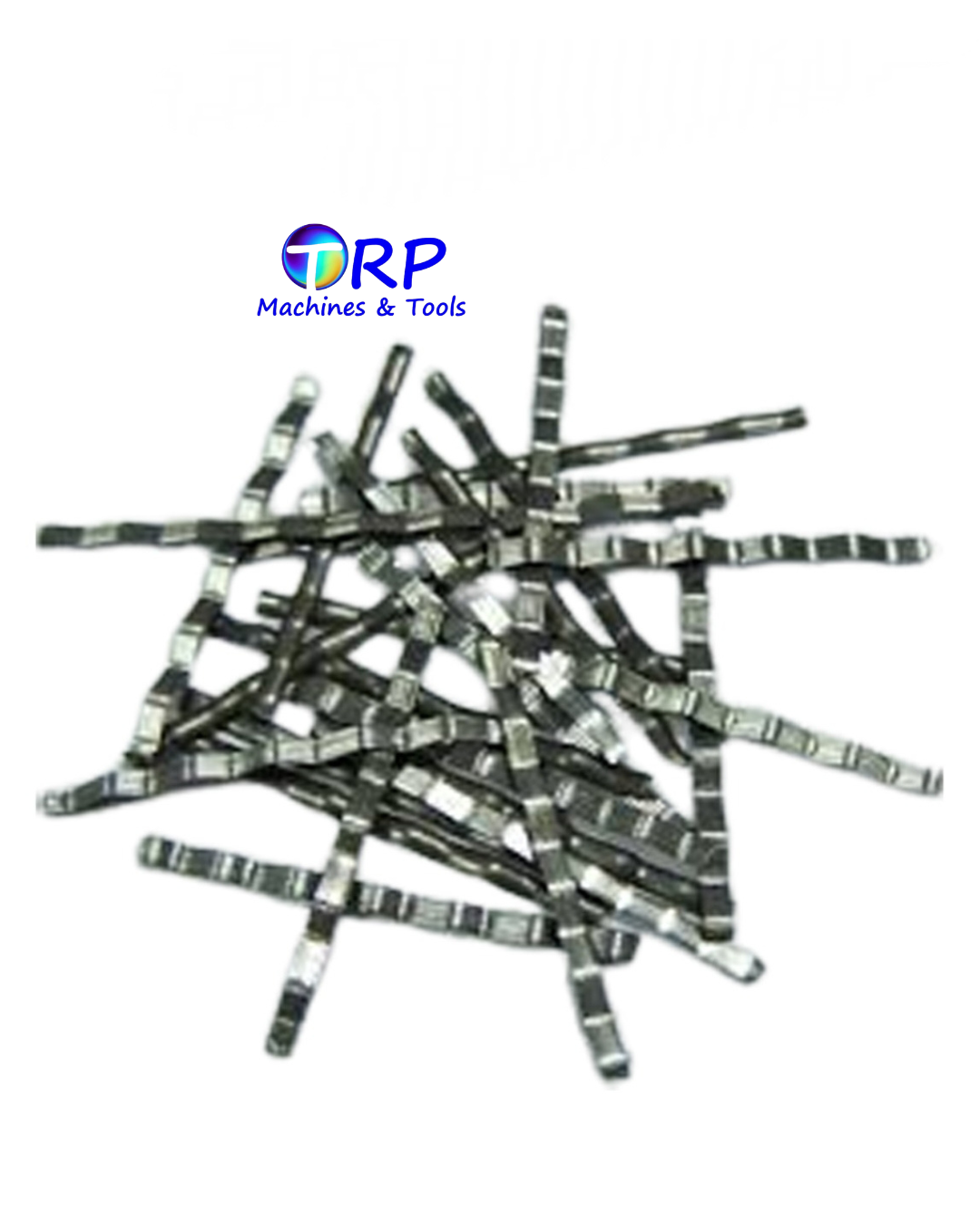
Steel Fiber is a high-strength steel reinforcement material added directly into concrete during mixing. Thousands of small steel fibers are uniformly distributed throughout the concrete, providing three-dimensional reinforcement that improves tensile strength, flexural strength, impact resistance, fatigue resistance, and crack control.
Also known as Steel Fiber for Concrete, Concrete Steel Fiber, Hooked End Steel Fiber, Crimped Steel Fiber, Dramix Steel Fiber, Concrete Reinforcement Fiber, Industrial Flooring Steel Fiber, Macro Steel Fiber, High Tensile Steel Fiber, and Steel Fibre Reinforcement, these fibers are widely used in industrial floors, warehouses, precast concrete, pavements, tunnels, airports, bridges, ports, metro rail, highways, dams, and heavy-duty infrastructure projects.
TRP Machines & Tools, Mumbai, Maharashtra, India, supplies premium-quality Steel Fibers manufactured from high-tensile steel wire with consistent dimensions, superior bonding performance, and excellent durability.
02Quick Answer
Steel Fiber is a high-strength steel reinforcement added to concrete to improve crack resistance, tensile strength, flexural strength, impact resistance, durability, and load-carrying capacity. It distributes stresses throughout the concrete, reducing crack formation and increasing structural performance.
03What is Steel Fiber?
Steel Fiber is a small, discrete piece of high-strength steel wire or sheet specifically manufactured for reinforcing concrete. Unlike conventional reinforcement bars, steel fibers are randomly distributed throughout the concrete, providing reinforcement in every direction.
This multidirectional reinforcement significantly improves the concrete's ability to resist cracking, impact, fatigue, and heavy loads while increasing overall structural durability.
04Why is Steel Fiber Required?
Concrete has excellent compressive strength but relatively low tensile strength.
Steel Fiber helps by:
- Controlling shrinkage cracks
- Increasing tensile strength
- Improving flexural strength
- Enhancing impact resistance
- Reducing crack width
- Increasing fatigue resistance
- Improving abrasion resistance
- Extending service life
05How Does Steel Fiber Work?
- 01Fiber AdditionSteel fibers are added directly into the concrete mixer.
- 02Uniform MixingThe fibers become evenly distributed throughout the concrete.
- 03Concrete PlacementThe fiber-reinforced concrete is poured and compacted normally.
- 04Crack FormationWhen micro-cracks begin to develop, the steel fibers bridge across the cracks.
- 05Load TransferThe fibers transfer stresses across the crack, preventing crack propagation and improving structural integrity.
06Why is Steel Fiber Better Than Conventional Reinforcement?
Steel fibers provide reinforcement throughout the entire concrete volume rather than only at specific locations.
Benefits include:
- Three-dimensional reinforcement
- Better crack control
- Higher impact resistance
- Reduced shrinkage cracking
- Improved fatigue performance
- Better abrasion resistance
- Lower maintenance costs
- Longer structural life
07Hooked End Steel Fiber
The most widely used steel fiber, providing excellent anchorage and pull-out resistance.
08Crimped Steel Fiber
Designed with a crimped profile for enhanced bonding with concrete.
09Straight Steel Fiber
Used in specialized precast and shotcrete applications.
10Glued Steel Fiber
Supplied in glued bundles for easier batching and uniform mixing.
11Loose Steel Fiber
Individual fibers suitable for general concrete reinforcement applications.
12Key Features
- High tensile steel
- Excellent bond strength
- Uniform dimensions
- Corrosion-resistant finish (optional)
- High durability
- Crack bridging capability
- Improved flexural strength
- Superior impact resistance
- Better fatigue resistance
- Easy mixing
- Compatible with ready-mix concrete
- Long service life
- Low maintenance
13Structural Benefits
- Improved tensile strength
- Higher flexural strength
- Better crack control
- Increased load-bearing capacity
- Enhanced structural integrity
14Construction Benefits
- Faster concrete placement
- Reduced reinforcement installation time
- Lower labour requirement
- Improved construction efficiency
- Simplified reinforcement detailing
15Durability Benefits
- Reduced shrinkage cracking
- Higher abrasion resistance
- Better impact resistance
- Improved fatigue performance
- Longer service life
16Technical Specifications
- Product Type: Steel Fiber
- Material: High Tensile Carbon Steel
- Fiber Types: Hooked End / Crimped / Straight
- Application: Concrete Reinforcement
- Surface Finish: Bright / Copper Coated (Optional)
- Length: Various Sizes Available
- Diameter: Various Sizes Available
- Aspect Ratio: Available in Multiple Ratios
- Tensile Strength: High Tensile Grade
- Packaging: Standard Industrial Packaging
17Applications
Steel Fiber is widely used in:
- Industrial Flooring
- Warehouse Floors
- Factory Floors
- Concrete Pavements
- Airport Runways
- Highways
- Bridges
- Flyovers
- Metro Rail Projects
- Railway Infrastructure
- Tunnels
- Shotcrete
- Dams
- Marine Structures
- Ports
- Parking Areas
- Precast Concrete
- RCC Flooring
- Heavy Duty Slabs
- Infrastructure Projects
18Industries Served
- Construction Industry
- Civil Engineering
- Structural Engineering
- Infrastructure Development
- Industrial Construction
- Warehousing
- Logistics Parks
- Mining Industry
- Power Plants
- Marine Engineering
- Government Infrastructure Projects
- Precast Concrete Industry
19Steel Fiber vs Conventional Reinforcement
| Feature | Steel Fiber | Conventional Reinforcement |
|---|---|---|
| Crack Control | Excellent | Moderate |
| Reinforcement Distribution | Three-Dimensional | Localized |
| Impact Resistance | High | Moderate |
| Fatigue Resistance | Excellent | Good |
| Construction Speed | Faster | Slower |
| Labour Requirement | Lower | Higher |
| Durability | Higher | Good |
| Maintenance | Lower | Higher |
20Installation & Mixing Guidelines
- Add fibers gradually during batching.
- Ensure uniform distribution throughout the concrete.
- Follow the recommended dosage for the application.
- Avoid fiber balling by maintaining proper mixing time.
- Place and compact concrete using standard practices.
- Finish the surface according to project requirements.
21Maintenance Tips
- Store fibers in a dry environment.
- Protect packaging from moisture.
- Use clean batching equipment.
- Follow recommended dosage rates.
- Inspect concrete quality during placement.
22Buying Guide
Before purchasing Steel Fiber, consider:
- Tensile strength
- Fiber type
- Aspect ratio
- Material quality
- Dimensional consistency
- Corrosion resistance
- Manufacturer reputation
- Packaging quality
- Technical support
- Project compatibility
23Why Choose TRP Machines & Tools?
TRP Machines & Tools supplies premium-quality Steel Fibers manufactured using high-tensile steel to deliver superior reinforcement, crack control, and long-term durability for demanding construction and infrastructure projects.
24Why Customers Choose TRP Machines & Tools
- Premium high-tensile steel
- Uniform fiber dimensions
- Excellent crack control
- High bond strength
- Consistent quality
- Long service life
- Bulk supply capability
- Competitive pricing
- Pan India delivery
- Export-quality products
- Technical assistance
- Trusted by contractors, builders, precast manufacturers, industrial flooring specialists, and infrastructure developers
25Frequently Asked Questions
What is Steel Fiber?
Steel Fiber is a high-strength steel reinforcement material mixed into concrete to improve crack resistance, tensile strength, and durability.
Why use Steel Fiber in concrete?
Steel fibers reduce cracking, improve load distribution, increase impact resistance, and enhance the long-term performance of concrete structures.
Where is Steel Fiber commonly used?
Steel Fiber is widely used in industrial floors, warehouses, tunnels, bridges, pavements, precast concrete, airports, ports, metro projects, and heavy-duty infrastructure.
Which type of Steel Fiber is most commonly used?
Hooked End Steel Fiber is the most widely used because of its superior anchorage and bonding characteristics.
Can Steel Fiber replace conventional reinforcement?
Steel Fiber can reduce or supplement traditional reinforcement in many applications. The final reinforcement design should always follow structural engineering requirements.
26Conclusion
Steel Fiber is one of the most effective concrete reinforcement solutions for improving crack resistance, tensile strength, durability, and long-term structural performance. By providing three-dimensional reinforcement throughout the concrete, it enhances load distribution, minimizes maintenance, and extends service life.
Whether you are constructing industrial floors, warehouses, bridges, highways, tunnels, precast concrete, airport pavements, metro systems, or heavy-duty infrastructure, TRP Machines & Tools supplies premium-quality Steel Fiber designed to meet the demands of modern construction.
Steel Fiber
- Steel Fiber for Concrete
- Hooked End Steel Fiber
- Crimped Steel Fiber
- Concrete Steel Fiber
- Steel Fibre Reinforcement
- Industrial Flooring Steel Fiber
- High Tensile Steel Fiber
- Steel Reinforcement Fiber
- Concrete Reinforcement Fiber
- Macro Steel Fiber
- Best Steel Fiber Manufacturer in India
- Hooked End Steel Fiber Supplier
- Crimped Steel Fiber for Concrete
- Steel Fiber for Industrial Flooring
- Steel Fiber for RCC Concrete
- Steel Fiber for Shotcrete Applications
- Steel Fiber for Warehouse Flooring
- High Tensile Steel Fiber India
- Steel Fiber for Infrastructure Projects
- Premium Steel Fiber Supplier India