

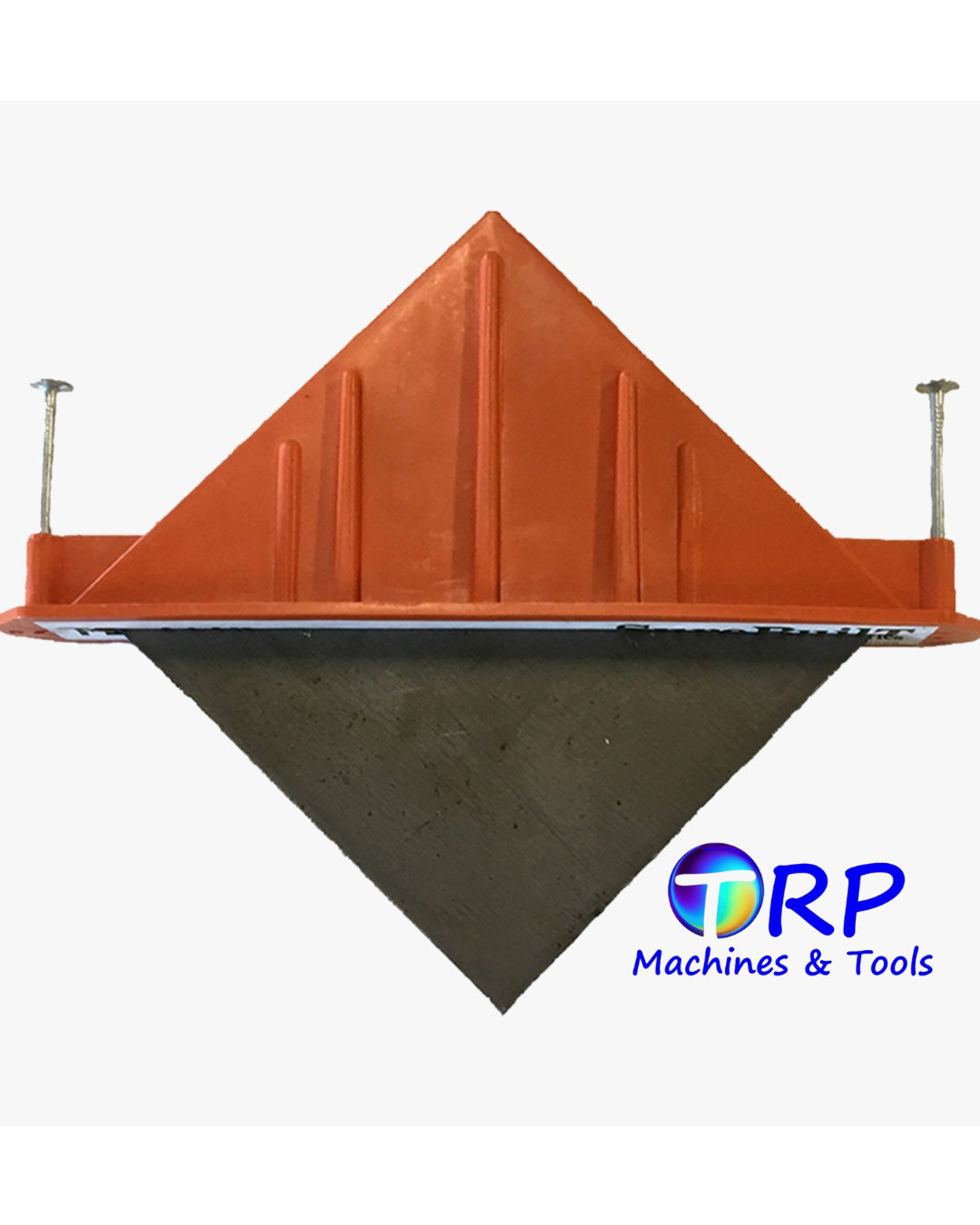
When Selecting a dowel plate for concrete flooring, one should have a good understanding of the required tests that will ensure successful load transfer, precise dimensions, high quality of materials and longevity. The name IS Testing Standard Dowel Plate can be often seen while searching for Indian testing and quality standards on dowel plates for concrete structures.
Nevertheless, it should be noted that there is a difference between a certain product standard and testing standards for concrete, steel, testing, pavement design and other requirements for the dowel plate. IS 456:2000 is an Indian Standard for plain and reinforced concrete and is not a special standard for diamond dowel plates. Currently, BIS includes IS 456:2000 in the list of the Fourth Revision of the Code of Practice for Plain and Reinforced Concrete.
Therefore, regarding the diamond dowel plate system, one should take into account the appropriate standards for concrete, material specifications, engineering requirements, project drawings and pavement/flooring design.
What Is a Dowel Plate?
The dowel plate is an element used to transfer loads from one slab of concrete to another through a joint. The function of this metal plate is to transfer vertical loads from one concrete slab to the adjoining slab with allowable horizontal movement.
Industrial floors made from concrete usually employ diamond shaped dowel plates that are often integrated with a sleeve. This allows for controlled horizontal movement caused by the contraction of concrete due to different temperatures. This will ensure that there is improved load transfer from the joints and limited differential movement between slabs.
IS Testing Standard Dowel Plate
The key factor concerning IS Testing Standard Dowel Plate is that the IS 456 should not be referred to as a specific testing standard for diamond dowel plates automatically.
According to BIS, IS 456:2000 is designated as “Plain and reinforced concrete – Code of practice (Fourth Revision).” The BIS database states that IS 456 is a standard applied for concrete laboratory testing.
That is why, a dowel plate has to be tested based on the conditions set forth for the particular project and its components.
It depends on the purpose of testing and inspection that can include:
- Material of steel
- Plate sizes
- Measurement of thickness
- Measurement of length and width
- Shape and geometry
- Surface
- Material class
- Quality of welding (when necessary)
- Coating/corrosion resistance
- Performance of load transfer
- Dimensions of sleeves
- Compatibility of installation
The actual testing program should be developed in accordance with the technical specification.
Why is Dowel Plate Testing Important?
Dowel plates work in concrete joints that undergo repeat loading. There could be a lot of movement of machinery including forklifts, pallet trucks, and other industrial vehicles in places like industrial floors, warehouses, factories, logistics hubs, and manufacturing plants.
Why Testing and Inspection?
Testing and inspection ensure that the manufactured product meets dimensional and material specifications.
Dimensions
The dimensions of a dowel plate will affect how it is installed and the transfer of loads through it. Dimensions that may matter could be plate length, width, thickness, and geometric dimensions.
Inspection of dimensions may help detect any deviations in manufacture prior to delivery to the construction site.
Material Properties
The material of the plate must conform to the required materials specification for the project. Material certificates and material testing can provide assurance that the right grade was used.
Surface Finish
There should be inspection for defects which might affect the installation and longevity of the plate. Protective coating of the plate could also be required depending on the environment.
Testing Requirements for Diamond Dowel Plate
The relevant IS Testing Standard Dowel Plate requirements vary according to the project and its specifications. Typical quality control process includes several steps.
1. Raw Material Testing
Steel raw material is tested in accordance with the procurement specification and relevant material specification.
Typical documents may be the following:
Certificates of test for material
Heat or batch number
Chemical composition
Mechanical properties
Documents from the supplier
2. Dimensional Inspection
Calibrated equipment can be used to inspect manufactured plates.
Typical inspections are the following:
- Length
- Width
- Thickness
- Shape
- Flatness
- Edge conditions
- Tolerances
The results of measurement provide assurance about conformity of the plate to the approved drawing.
3. Visual Inspection
A visual inspection may detect any defects associated with manufacturing, including excessive deformation, sharp irregularities, damages of surface or coating.
4. Mechanical Tests
In case such testing is needed by project specifications, it is used to verify properties of steel raw material or to evaluate the performance of the joint assembly.
The particular test procedure must be selected based on the material specification and engineering requirements rather than generic IS testing for dowel plates.
Interrelation Between IS 456 and Dowel Plate
IS 456 is very much relevant to the concrete work; however, it should not be taken as an IS testing standard dowel plate.
It offers guidelines for plain and reinforced concrete. BIS states that IS 456:2000 is the Fourth Revision of the standard which has been reviewed in 2025.
On the other hand, diamond dowel system is a special type of joint load transfer element. It means that in addition to what IS 456 says, other pieces of information can also be required for the system design and approval.
These include:
- Concrete class
- Slab thickness
- Joint geometry
- Loads applied
- Traffic
- Joint spacing
- Dowel plate dimensions
- Sleeve geometry
- Material specifications of steel
- Installation specifications
Role of IRC Standards and Guidelines
In addition to being useful for industrial floors, Indian Roads Congress literature can prove useful in rigid pavement construction as well as highway pavement construction. IRC has established a specific H-3 committee that deals with all issues regarding rigid pavements.
IRC has several guidelines with respect to rigid pavement design and evaluation. For instance, IRC literature includes IRC:58 which discusses the rigid pavement design for highways. This is because it is possible that a dowel plate used in an industrial floor has different design requirements as compared to a dowel used in highway pavement construction. This shows the importance of using the appropriate standard depending upon the particular project
Important Quality Tests Prior to Installation
Before the installation of the dowel plate system, the following important tests must be carried out by the contractor to confirm approved plans and product specifications.
Important tests are:
- Confirmation of plate sizes
- Grade of steel used
- Plate surface condition
- Sleeve compatibility test
- Spacing test
- Joint position
- Alignment test
- Installation guidelines
- Tolerances
- System inspection prior to pouring concrete
Correct installation is important since even though a plate may be dimensionally accurate, it will fail in its function if it is improperly installed.
Choosing a Reliable Manufacturer for Your Dowel Plate
While buying a dowel plate, apart from the name of the product, one needs to consider the technical data and the quality control offered by the manufacturer.
A trustworthy manufacturer will be able to offer you details like:
- Product Dimensions
- Technical Data
- Technical Drawings
- Sleeves Details
- Manufacturing Data
- Inspection Report
- Materials Certificates if needed
- Installation Advice
- Doweling Plate Custom Sizes
TRP Machines & Tools offers construction products and solutions. Among them is the Diamond Dowel Plate & Sleeve System. If you need project-specific advice, you can tell us about the slab thickness, loading, joints, etc.
Conclusion
The phrase IS Testing Standard Dowel Plate must be taken with care. IS 456:2000 is the Indian Standard that governs plain and reinforced concrete, but it does not deal specifically with the testing of diamond dowel plates. At the present time, BIS considers IS 456:2000 to be the Fourth Revision of its Code of Practice for Plain and Reinforced Concrete.
Testing and quality control of dowel plate systems need to be based on the applicable material standards, specifications of the project, engineering design, and pavement or floor guidance. Dimensional checking, material testing, visual inspection, and special tests for the individual project are all part of a good quality control procedure.
Selection of proper plate dimensions, proper sleeve, material specification, and method of application is very important for industrial flooring and concrete joint applications. It is helpful to work with a manufacturer that can provide technical information and assistance on a project basis.